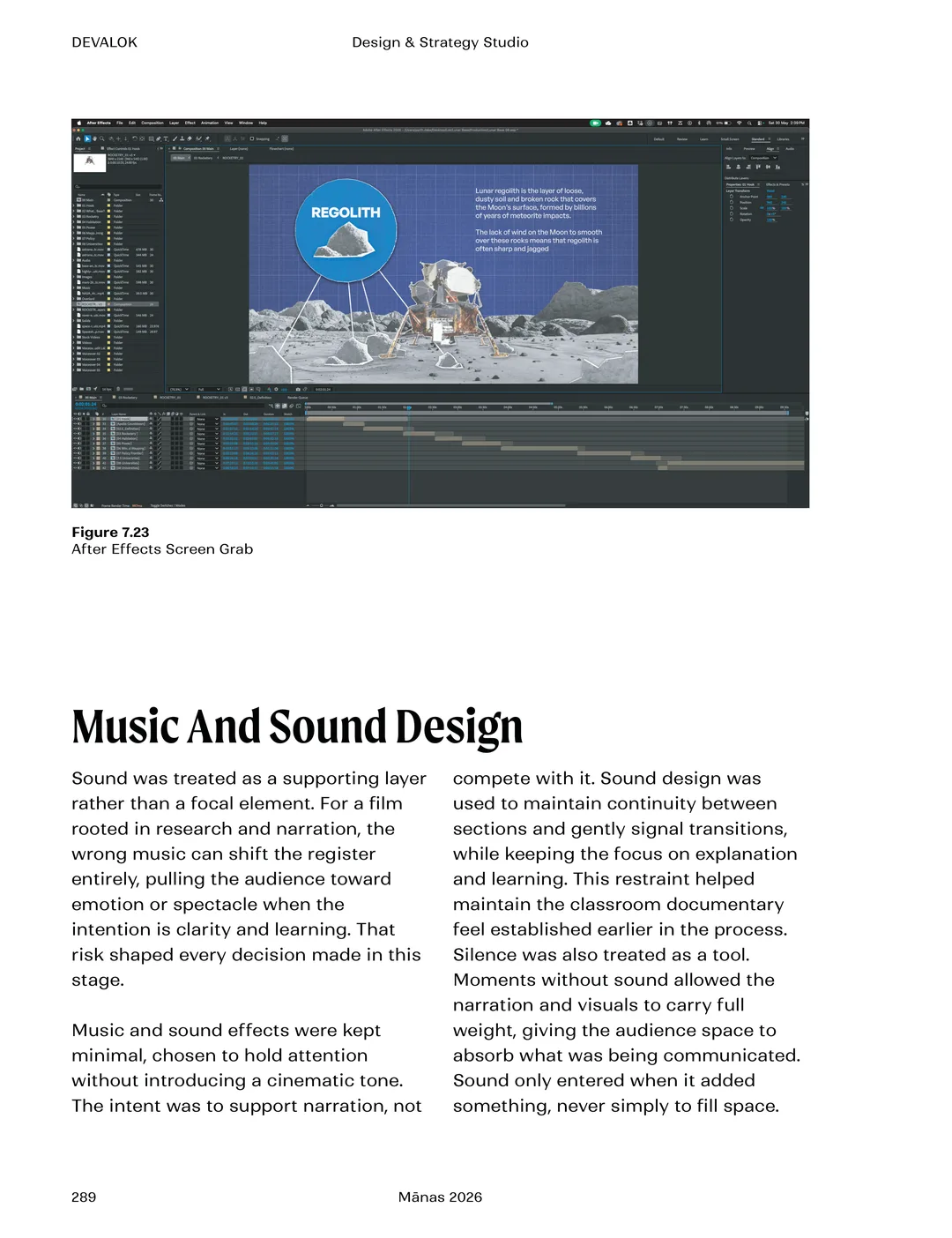
Sound was treated as a supporting layer rather than a focal element. For a film rooted in research and narration, the wrong music can shift the register entirely, pulling the audience toward emotion or spectacle when the intention is clarity and learning. That risk shaped every decision made in this stage.Music and sound effects were kept minimal, chosen to hold attention without introducing a cinematic tone. The intent was to support narration, not Music And Sound Designcompete with it. Sound design was used to maintain continuity between sections and gently signal transitions, while keeping the focus on explanation and learning. This restraint helped maintain the classroom documentary feel established earlier in the process.Silence was also treated as a tool. Moments without sound allowed the narration and visuals to carry full weight, giving the audience space to absorb what was being communicated. Sound only entered when it added something, never simply to fill space.Figure 7.23After Effects Screen Grab289DEVALOKMānas 2026Design & Strategy Studio
It stands as a reminder that when design is intentional, it does not distract from knowledge. It helps knowledge travel further.The Lunar Bases demonstrates how thoughtful design can sit alongside academic inquiry & without overpowering it. By working within the logic of the classroom, respecting student-led research, and applying a visual language rooted in history, the film turned a speculative topic into a credible learning artifact. Watch the Lunar Bases Video here:290Vol. 02Chapter 7Lunar Bases